



Quick Answer:
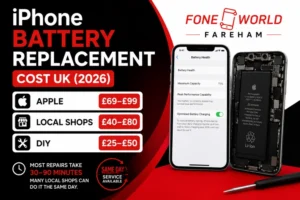
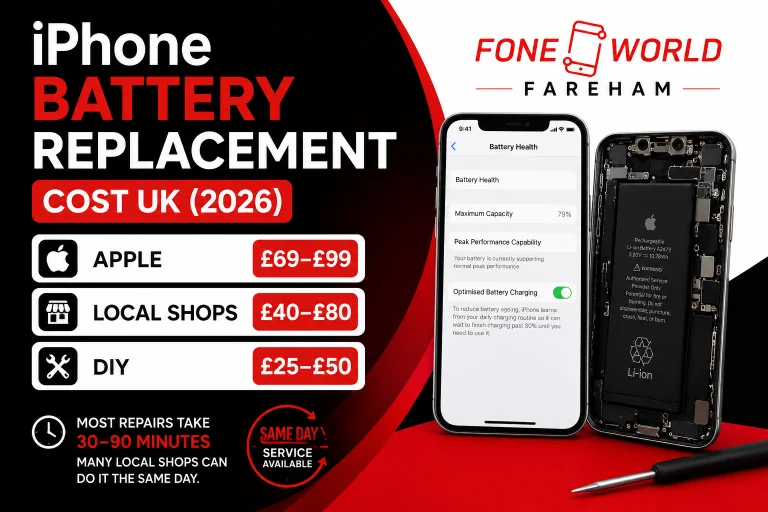
Apple: £69–£99 | Local shops: £40–£80 | DIY: £25–£50. Most repairs take 30–90 minutes, and many local shops can do it the same day.
Your iPhone isn’t lasting the day anymore. You charge it overnight, maybe top it up once or twice, and still end up hunting for a charger by mid-afternoon. After a few hundred charge cycles, capacity starts to drop. You might not notice it at first, but then it becomes obvious. Shorter screen time. Bigger percentage drops. More frequent charging.
If you’re trying to figure out the iPhone battery replacement cost UK, the numbers vary more than most people expect. Below, you’ll get the real UK price ranges for Apple, local shops, and DIY repairs, plus the points that usually catch people out.
How Much Does iPhone Battery Replacement Cost in the UK?
In the UK, most battery replacements land somewhere between £40 and £90 in 2026. Go DIY, and it can drop to around £25. Stick with official repair through Apple Inc., and it can reach £99. The price gap starts making sense once you compare what’s included in each repair.
- Battery quality: Genuine parts match the phone properly. Cheaper ones don’t always.
- Labour: It’s not just a swap. The phone has to be opened, resealed, and tested.
- Model: Newer iPhones are tighter inside. More adhesive. Slower job.
- Location: London costs more. Smaller towns usually less, sometimes 10–20% difference.
One thing most people don’t expect: the battery itself isn’t expensive. You’re paying for the work, the tools, and the risk of getting it wrong, especially when battery health reporting in iOS and overall performance depend on how well the job’s done.
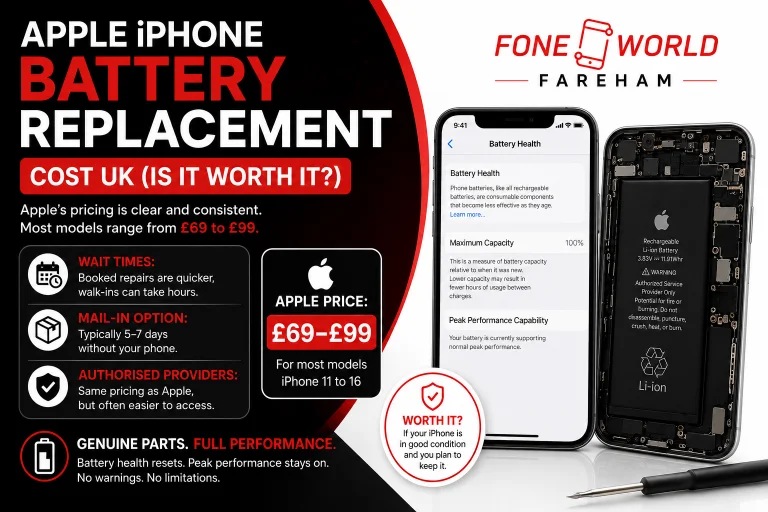
Apple iPhone Battery Replacement Cost UK (Is It Worth It?)
Apple’s pricing is easier to follow than most local repair quote. Most models, iPhone 11 through 14, sit in that £69–£79 range. Newer ones, like the 15 and 16, go up to about £99.
You’re paying for a genuine part, proper diagnostics, and a repair done within Apple’s system. If you’ve got AppleCare+ and the battery drops below 80%, it’s usually covered. Otherwise, it’s the full price. The part people forget is the wait. Booked appointments move quickly. Walk in without one, and it can take a while.
What you don’t see upfront:
- Wait times: booked repairs are quicker, walk-ins can take hours
- Mail-in option: typically 5–7 days without your phone
- Authorised providers: same pricing as Apple, but often easier to access
After replacement, the phone runs as expected. Battery health resets, and features like peak performance in iOS stay fully supported. No warnings, no limitations. So, is it worth it? If your phone is still in good condition and you plan to keep it another year or two, Apple’s route makes sense. If the device is older or already showing other issues, the price starts to feel harder to justify.
Third-Party iPhone Battery Replacement Cost UK vs Apple
The third-party iPhone battery replacement cost UK usually falls between £40 and £80. It depends on the battery, the model, where you go, a few things, really. So, most people save £20–£40 compared to Apple. Price is only one part of it.
- Parts: quality varies, some shops use reliable aftermarket batteries, others don’t
- Sealing: water resistance (IP67/IP68) often isn’t fully restored
- Software: newer iPhones may show a “battery not verified” message
This doesn’t stop the phone working, but it does affect how the system reports battery health and performance.
Where third-party makes sense:
- You’re out of warranty
- You want same-day service
- You’re fine trading a small software warning for lower cost
Where it doesn’t:
- You care about resale value
- You want everything to stay “as original”
- The phone is still relatively new
So the choice is fairly simple: pay more for a cleaner repair, or save money and accept a few small trade-offs.
DIY iPhone Battery Replacement Cost: Can You Really Save Money?
A DIY iPhone battery replacement kit cost UK usually falls between £25 and £50, depending on the model and kit quality. iFixit kits come with the battery, tools, and instructions. Cheaper kits are available, but the parts and tools aren’t always consistent.
The actual cost isn’t just the kit:
- Battery: roughly £12–£25
- Basic tools: pentalobe screwdriver, opening picks, suction tool
- Adhesive strips: needed to reseal properly
- Time: around 45–90 minutes if everything goes smoothly
The risk starts when the phone is open. Opening an iPhone means dealing with tight adhesive, delicate connectors, and components packed closely together. A small mistake, especially around the display or battery connector, can turn a £30 repair into a much bigger problem. DIY makes sense if the phone is older, out of warranty, and you’re comfortable working with small electronics. On newer models, one slip can cost more than the savings.
What’s the cost to replace iPhone battery UK by model?
Prices don’t stay flat across models. Newer devices and Pro variants usually cost more due to larger lithium-ion batteries and tighter internal design.
Here’s a clear UK price breakdown for 2026:
| iPhone Model | Apple / ASP | Local Shop | DIY Kit |
| iPhone SE (2nd / 3rd Gen) | £69 | £40–£55 | £25–£35 |
| iPhone 11 | £69 | £40–£50 | £25–£32 |
| iPhone 12 / 12 Mini | £69 | £45–£55 | £28–£35 |
| iPhone 12 Pro / Pro Max | £69 | £50–£60 | £30–£38 |
| iPhone 13 / 13 Mini | £69 | £48–£58 | £30–£38 |
| iPhone 13 Pro / Pro Max | £69 | £55–£65 | £32–£40 |
| iPhone 14 / 14 Plus | £69 | £50–£65 | £32–£40 |
| iPhone 14 Pro / Pro Max | £69 | £60–£70 | £34–£42 |
| iPhone 15 / 15 Plus | £99 | £65–£75 | £36–£45 |
| iPhone 15 Pro / Pro Max | £99 | £70–£80 | £38–£48 |
| iPhone 16 / 16 Plus | £99 | £68–£80 | £40–£50 |
| iPhone 16 Pro / Pro Max | £99 | £75–£85 | £42–£52 |
The pattern is pretty clear:
- Standard models stay in the lower range
- Pro and Pro Max devices cost more to work on
- Newer models push prices up, especially for DIY
It isn’t about the battery itself, it’s the extra time and care needed to open, reseal, and test newer devices properly.
How Long Does iPhone Battery Replacement Take in the UK?
The iPhone battery replacement time UK depends on where you go, but most repairs are quicker than people expect.
- Apple Store (Genius Bar): around 45–90 minutes with a booking
- Authorised service provider: similar timing, sometimes slightly longer
- Local shop: usually 20–45 minutes for common models
- DIY: 45–90 minutes if it’s your first attempt
- Mail-in service: typically 5–7 days
You might wait, or have to come back later. Local shops are usually quicker. Many handle battery swaps while you wait, especially for older or widely used models.
When Should You Replace Your iPhone Battery?
Start with battery health, but don’t stop there. iPhone battery health when to replace usually comes down to that 80% mark. Once maximum capacity drops below it, performance and daily use start to change.
But don’t rely on the number alone. Look at how the phone behaves:
- Battery health shows under 80% in Settings
- The phone shuts down early, even at 20–40%
- Performance drops due to peak performance limits
- You’re charging more than you used to
- The battery looks swollen or pushes the screen, that needs immediate attention
Modern lithium-ion batteries don’t recover lost capacity. Draining and recharging won’t fix it. Once it’s worn, it stays worn. That’s usually when the phone starts becoming annoying to live with, especially if the rest of the phone still works fine.
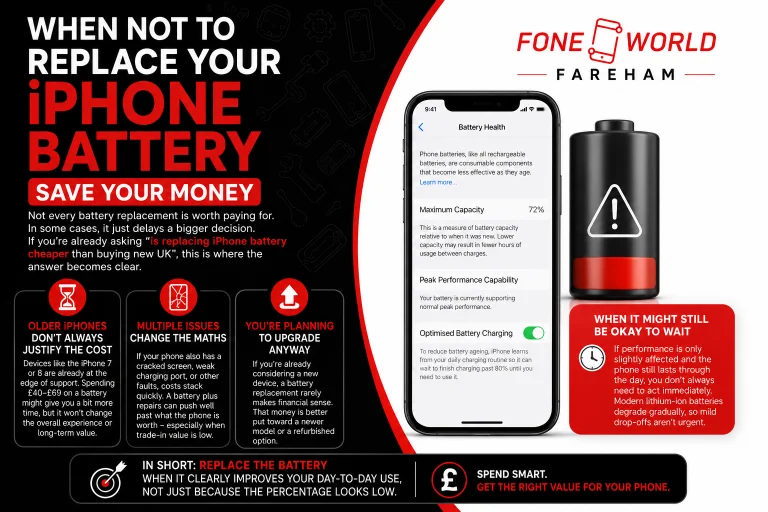
When NOT to Replace Your iPhone Battery (Save Your Money)
Not every battery replacement is worth paying for. In some cases, it just delays a bigger decision. If you’re already asking “is replacing iPhone battery cheaper than buying new UK”, this is where the answer becomes clear.
Older iPhones don’t always justify the cost
Devices like the iPhone 7 or 8 are already at the edge of support. Spending £40–£69 on a battery might give you a bit more time, but it won’t change the overall experience or long-term value.
Multiple issues change the maths
If your phone also has a cracked screen, weak charging port, or other faults, costs stack quickly. A battery plus repairs can push well past what the phone is worth — especially when trade-in value is low.
You’re planning to upgrade anyway
If you’re already considering a new device, a battery replacement rarely makes financial sense. That money is better put toward a newer model or a refurbished option.
When it might still be okay to wait
If performance is only slightly affected and the phone still lasts through the day, you don’t always need to act immediately. Modern lithium-ion batteries degrade gradually, so mild drop-offs aren’t urgent. In short, replace the battery when it clearly improves your day-to-day use, not just because the percentage looks low.
Apple vs Third-Party vs DIY: Which Option Is Best for You?
If you’re comparing options, it usually comes down to cost, risk, and how much you care about keeping everything original.
| Option | Cost | Risk | Warranty | Best For |
| Apple / ASP | £69–£99 | Very low | ~90 days | Newer iPhones, long-term use |
| Local Shop | £40–£80 | Low–moderate | 6–12 months (varies) | Saving money without major compromise |
| DIY | £25–£50 | Moderate–high | None | Older devices, confident users |
The numbers help, but the repair quality matters more:
- Apple route: safest option. You get a genuine battery, full support from Apple Inc. systems, and no software warnings in iOS.
- Local shops: a middle ground. Cheaper, faster, but quality depends on the parts and how carefully the phone is resealed.
- DIY: lowest cost, highest risk. Fine for older phones, but mistakes get expensive quickly.
There’s no perfect option for everyone. If you care about reliability and resale value, Apple makes sense. If you just want a cheaper fix that works, a good local shop is usually enough. DIY only really fits when cost matters more than risk.
Does a New iPhone Battery Improve Performance?
Usually, yes, especially if the old battery was badly worn. When battery health drops, the system in iOS limits performance to stop unexpected shutdowns. That’s why older devices can start feeling slower even if nothing else has changed.
You’ll notice it in small ways:
- apps taking longer to open
- small stutters when scrolling
- quicker drops in battery percentage
Once the battery is replaced, those limits are removed. The phone runs at its normal speed again, and everything feels more consistent. It’s not a dramatic upgrade like a new device, but it often brings the phone back to how it used to feel, especially if the rest of it is still in good condition.
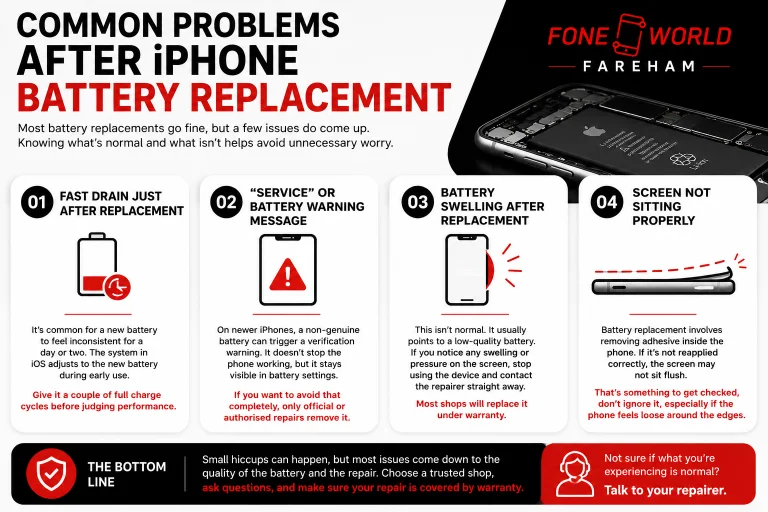
Common Problems After iPhone Battery Replacement
Most battery replacements go fine, but a few issues do come up. Knowing what’s normal and what isn’t helps avoid unnecessary worry.
Fast drain just after replacement
It’s common for a new battery to feel inconsistent for a day or two. The system in iOS adjusts to the new battery during early use. Give it a couple of full charge cycles before judging performance.
“Service” or battery warning message
On newer iPhones, a non-genuine battery can trigger a verification warning. It doesn’t stop the phone working, but it stays visible in battery settings. If you want to avoid that completely, only official or authorised repairs remove it.
Battery swelling after replacement
This isn’t normal. It usually points to a low-quality battery. If you notice any swelling or pressure on the screen, stop using the device and contact the repairer straight away. Most shops will replace it under warranty.
Screen not sitting properly
Battery replacement involves removing adhesive inside the phone. If it’s not reapplied correctly, the screen may not sit flush. That’s something to get checked, don’t ignore it, especially if the phone feels loose around the edges.
Is It Worth Replacing an iPhone Battery or Buying a New Phone?
This is where most people pause, is replacing iPhone battery cheaper than buying new UK, or are you just putting money into a phone you’ll replace anyway?
It usually comes down to how the phone feels day to day. If everything else still works fine and it’s just the battery letting you down, a replacement tends to make sense. You spend under £100 and the phone goes back to lasting a full day again.
Where it stops making sense is when other problems are already there. A weak battery on its own is easy to fix. Add a cracked screen or charging issues, and the total starts creeping up quickly. At that point, putting that money toward a newer device often feels like the better move.
In the end, it’s less about the percentage and more about how the phone fits your routine. If it’s getting in the way, fix it. If you’re already halfway out the door, save the money.
Final Thoughts: Making the Right Call on Your iPhone Battery
In the end, the right choice depends on whether your iPhone is still worth keeping. If it works well apart from the battery, a replacement is usually a sensible fix and far cheaper than upgrading. Apple is the cleaner route if you want full iOS support and no warning messages, while a good local shop can save money if you accept a small trade-off. DIY only really suits older phones or people who are comfortable opening devices. Don’t chase the cheapest option. Spend only if the battery is the main problem, not one problem in a longer list.